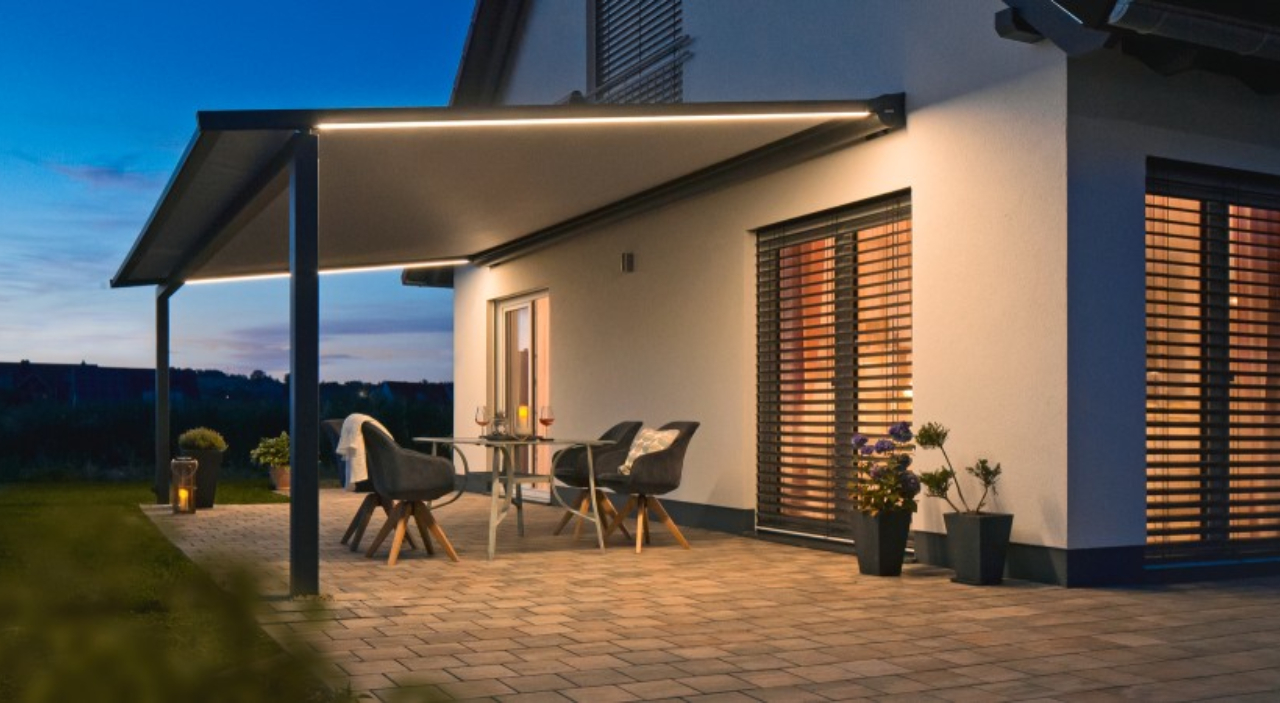
Awnings with Lighting and Heating: Using Your Patio After 6pm
A patio can be lovely on a bright summer afternoon, but most gardens are actually used across a wider stretch of the year. Think about spring evenings when the light hangs on, but the air cools quickly. Or early autumn when you still want to eat outside, yet you need a bit of shelter and warmth to stay comfortable.
That is why an awning works best when you plan it as a seasonal setup, not a summer-only feature. Done properly, it becomes solar shading when the sun is strong, then a practical framework for lighting and heating when the temperature drops in the evening. At Halo Sunblinds, we supply and fit awnings in Suffolk, including WAREMA awnings, and we help homeowners create outdoor spaces that feel inviting from spring through to autumn.
How an awning helps you use your garden in every season Most people think of an awning as shade. That is true, but the bigger benefit is control. An awning gives you a way to adapt your patio to changing conditions.
In summer, it reduces glare and blocks strong sun before it hits the glazing and seating area. That can reduce heat entering the home and lower cooling demand, while keeping the patio a comfortable temperature throughout the day.
In spring and autumn, the same awning helps you make the most of the evenings. It creates a defined, sheltered zone with light and heat, so you don’t have to head inside as soon as the temperature dips.
Summer: solar shading If your patio bakes in the sun all afternoon, it often stays uncomfortable into the evening. The concrete paving holds heat, the seating area feels exposed, and adjacent rooms indoors can feel stuffy too.
Awnings are a form of external solar shading. They block sunlight before it heats the glass and the space directly outside, so the whole inside-outside area can feel calmer by the time you sit down for dinner.
Spring and autumn: patio season is longer than you think In the shoulder seasons, the problem is rarely overheating. It is the quick drop in temperature and the sense that the patio is exposed.
With the right lighting and heating, the patio can still feel welcoming on a crisp April evening or a clear September night. Awnings give you a practical “ceiling” to plan around, so warmth and light are focused where people actually sit.
Lighting Great patio lighting is not only for summer. It is even more important in spring and autumn, when it gets dark earlier. Some awning systems can include integrated LED lighting, which keeps the setup minimal and avoids extra wall fittings.
Of course, you could drag a lamp from your living room outside, but this is a bit of a faff. If you only light the centre with a lamp, the edges will feel gloomy. Integrated lighting is far more convenient and can help you find a better balance.
Heating When a patio feels cold in the evening, a well-placed heater makes more difference than most people expect.
Some WAREMA setups can include radiant heaters, which are designed to warm people rather than trying to heat all the air around you. This is how you turn “we should go inside” into “shall we stay out for one more drink”, especially in spring and autumn.
Low sun Glare in the late afternoon and early evening from low sun is another reason you might stop using a patio. A valance can help block that low-angle sun that slips under the front edge of the awning. It is a practical upgrade that can make evenings more comfortable, even outside the peak summer months.
Electrically controlled awnings: easier adjustments across changing weather In the UK, conditions can shift quickly, especially in spring and autumn. The wind picks up, the temperature drops, a shower passes through.
Electrically controlled awnings make it easy to respond. You can extend for shelter, retract if the wind rises, and adjust as the light changes. This matters even more when it’s not summer, because you are more likely to be making small changes to stay comfortable.
Weather protection and peace of mind If your garden is exposed, you should plan for wind from day one. We stock awnings designed for unpredictable UK weather. They’re built to be robust in real-life conditions, not just on perfect days. Some systems can also include weather sensors to automatically retract or extend your awning if conditions change while you’re indoors.
The importance of planning early If you are self-building, early planning matters even more. It is far easier to allow for fixing points, finished wall build-ups, and neat cable routes for electrically controlled awnings, lighting, and heaters while the structure is still accessible. It means you can size the awning around how you will use the patio, not just the width of the doors. You also avoid last-minute compromises once paving, cladding, and external electrics are already signed off.
A quick checklist for year-round awning use • Do you need shade for strong summer sun and glare? • Will low sun be an issue, and would a valance help? • Would you benefit from integrated lighting for the evenings? • Where will heating be aimed so it warms people, not air? • Do you want simple control, or a more advanced system? • How exposed is the garden to wind and changeable weather? • Have you planned fixing points and electrics early enough to keep the finished result tidy and integrated?
Plan for more than summer, and you can enjoy your awning for longer The best outdoor spaces are ones that are designed to work across the seasons you actually live in. In summer, an awning provides solar shading that keeps the patio and adjoining rooms more comfortable. In spring and autumn, it creates a sheltered zone where lighting and heating can extend the time you want to stay outside after 6pm.
If you are looking at WAREMA awnings or want advice on awnings in Suffolk, we can help you plan a setup that fits your layout and your lifestyle, with the right add-ons for evening comfort.