A Guide to Solar Shading Solutions
If parts of your home get too bright, too hot, or both, you do not need to just “put up with it”. The right solar shading solutions let you control glare and heat without turning your rooms into dark boxes. This guide answers the questions people ask us most often, so you can work out what will suit your home.
What is solar shading? Solar shading is any product that helps you manage strong sunlight so rooms feel more comfortable. Within your house, that could mean Duette® honeycomb blinds for reducing glare while also helping with insulation, Pirouette® for soft filtered light, or interior shutters for privacy plus daylight control. External solar shading for the outside of your house can include external venetian blinds for adjustable light control or awnings when you want shade outside as well as less sun through nearby glazing.
How do solar shading systems work? Different systems solve different parts of the problem. External venetian blinds reduce glare by letting you tilt the slats so that the sun is reflected away. Duette® blinds diffuse light and add a layer at the window which helps with temperature comfort. Shutters give you structured control over light and privacy, especially in street-facing rooms. And awnings create shade over glass and the patio areas so your inside-outside space feels calmer on bright days.
What are the benefits of solar shading solutions? The biggest benefit is getting your room back. Solar shading helps you cut glare on TVs and laptops, stops harsh sun landing on seating areas, and improves privacy without needing heavy curtains closed all day. For example, café-style or tier-on-tier shutters let you maintain your privacy while still getting daylight, and adjustable venetian blinds help you manage glare hour by hour as the sun moves.

How to find the best solar shading solutions for you Start with the practical parts:
- Where the sun hits (morning, afternoon, evening)
- Whether you need heat control, glare control, privacy, or a mix
- How often you will adjust it (daily, weekly, only in summer)
- Whether you want it manual or motorised Once you have clear answers to those questions, picking the right product is much easier.
What are the best solar shading solutions for houses with large glass doors and extensions? For wide openings and bright extensions, you often need shading that covers a larger area and feels easy to live with. That might mean pairing internal blinds for day-to-day glare with an external option (like an awning) when you want to cut stronger sun and make the space more comfortable in summer.
Which residential solar shading options suit everyday family spaces like kitchens and living rooms? In busy rooms, simple wins. You want shading that is quick to adjust and easy to clean. In many homes, that means practical blinds and shutters for windows, with a focus on water-resistant materials for high humidity rooms.
What solar shading solutions work best for shaped windows (like gable ends)? For gable ends and unusual shapes, made-to-measure matters. A common approach is shaped blinds designed specifically for those windows. You get a neat fit and proper coverage where glare and heat is at its worst.
What is smart solar shading? Smart solar shading means your blinds or shading can be motorised and controlled in a way that fits your routine. Instead of walking around your house adjusting every window, you can control shading more easily. With some setups, you can automate it as part of a smart home approach.
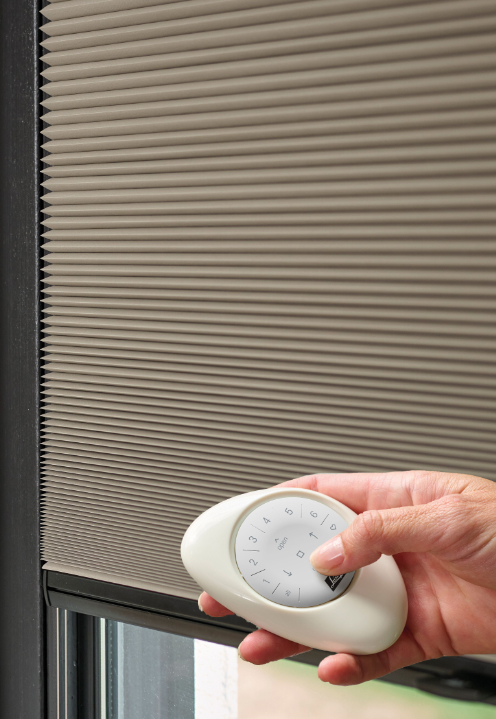
Which solar shading controls are available? Common control options include handheld remotes, wall switches, and app control. Some systems also support timers or sensor-based automation. Automation is useful when you want shading to react to conditions rather than relying on you remembering. When choosing, solar shading controls, the best option is the one you’ll use consistently.
Can you automate solar shading systems to respond to sun, heat, or wind conditions? Yes, depending on the product and setup. Automation can reduce the “faff factor”, especially in rooms where the sun moves across multiple windows during the day. It is also helpful when shading is hard to reach (for example: high glazing or awkward feature windows).
What’s the difference between internal and external solar shading solutions? Internal shading sits inside the room and is great for privacy and glare. External shading sits outside the glass. It can be more effective for heat control because it stops a lot of the sun before it reaches the window. Many homes benefit from using both in the right places, rather than choosing one approach for every window.
Which solar shading solutions are best when overheating is your main issue? Is overheating your main problem? Look first at shading that blocks stronger sun more effectively, especially on south and west-facing glazing and in conservatories. That might mean external venetian blinds, an awning, or a combination that reduces solar gain before it builds up indoors.
What solar shading solutions work best for gardens and patios? For outdoor spaces, you want shade you can use when you need it, and clear away when you do not. Awnings are a popular option because they give you flexible coverage for seating and dining areas. They can also reduce sun coming through nearby doors and windows.
How can an awning act as a solar shading solution for both your garden and nearby rooms? An awning shades the patio, and it also shades the glass behind it. That can reduce glare and direct sun through large doors, making the inside space feel cooler, calmer and more comfortable on bright days.
Book a free consultation with Halo Sunblinds If you want help choosing the right solar shading solutions for your home, book a consultation with us. You will get clear, practical advice and a free at-home measure and quotation, so you can move forward with confidence. Call us on 01449 766082 or use our contact form to arrange your consultation.